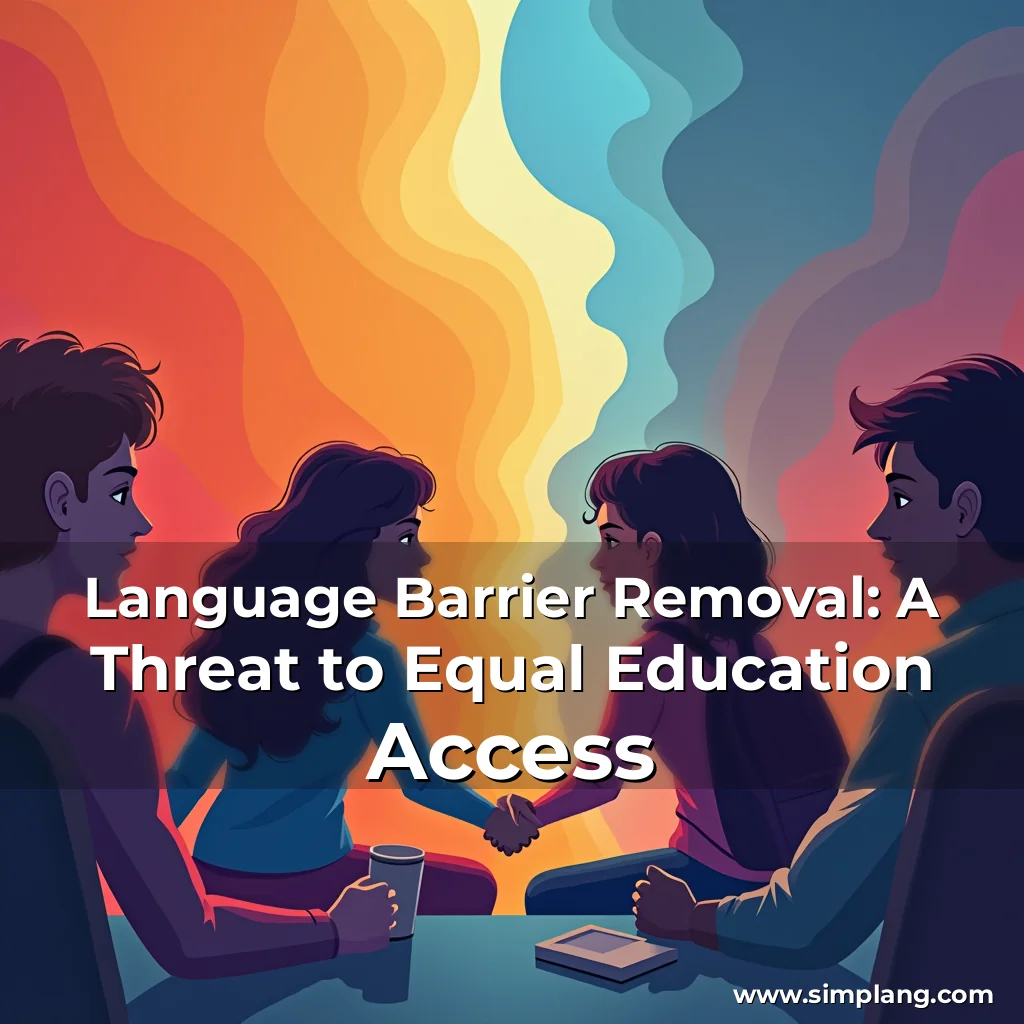
Language Barriers and the Pursuit of Education Equality
While volunteering at a middle school in Washington, D.c, I witnessed a science teacher attempting to communicate with a student who had recently arrived from Paris. The teacher employed hand gestures and a few Spanish words, striving to bridge the language gap between them. This scene illustrates the difficulties that students face when their native language is not recognized or supported in educational settings.
“We have room for but one language here,” wrote President Theodore Roosevelt in a 1919 letter. This sentiment reflects the long history of linguistic marginalization and exclusion in the United States. Since the Supreme Court’s decision in Brown v. Board of Education in 1954, the right to equal education access has been a core tenet of American values. However, study after study has shown that true education equality has yet to be realized.
The Trump Administration’s Executive Order 14224, which designates English as the official language of the United States, contradicts these values. By revoking President Bill Clinton’s Executive Order 13166, which aimed to improve access to services for persons with limited English proficiency (LEP), the Trump Administration has removed the requirement for federally funded schools to provide interpretation and translation services for emergent bilingual students.
As Education Week writer Ileana Najarro explains, this change has significant consequences for students with limited English proficiency. Schools may terminate their interpretation and translation services, leaving emergent bilingual students without the support they need to access school resources. This decision jeopardizes the country’s commitment to equal education access.
- President Clinton’s Executive Order 13166 required federally funded schools to provide support for emergent bilingual students, including interpretation and translation services.
- The Trump Administration’s Executive Order 14224 revokes this requirement, leaving schools without the necessary resources to support emergent bilingual students.
- Revoking this order has significant consequences for students with limited English proficiency, including reduced access to school resources and increased risk of literacy failure.
Benefits of Multilingualism
Native language literacy is not just a stepping stone to English literacy; it offers numerous benefits, including academic, economic, and social advantages. For example, the Center for Applied Linguistics describes multilinguals as possessing both a personal and societal asset that strengthens diplomatic relations and the global economy.
Moreover, supporting multilingualism brings communities together. When families’ efforts to support their children are dismissed due to limited English fluency, or emergent bilingual students are labeled as unintelligent, a wedge is driven into the communities around our public schools. Valuing native languages is an act of community building and an affirmation of our nation’s egalitarian ideals.
- Native language literacy offers academic, economic, and social advantages, including strengthened diplomatic relations and the global economy.
- Supporting multilingualism brings communities together, fostering a sense of belonging and identity.
- Valuing native languages is an act of community building and an affirmation of our nation’s egalitarian ideals.
Protecting Emergent Bilingual Students
State departments of education and school districts must protect students’ and families’ rights to translation services and language-learning support. This includes providing equal access to resources, such as interpretation and translation services, and ensuring that schools allocate sufficient funds to support emergent bilingual students.
Policymakers must recognize the importance of supporting emergent bilingual students in their fight for equal education access. This goal must be considered just as urgent as other contemporary civil rights issues.
By protecting the rights of emergent bilingual students, we can ensure that all students have equal access to education, regardless of their native language or identity.
Conclusion
Language barriers and the pursuit of education equality are deeply intertwined. By removing protections for emergent bilingual students, the Trump Administration has jeopardized the country’s commitment to equal education access. However, by recognizing the benefits of multilingualism and protecting the rights of emergent bilingual students, we can ensure that all students have equal access to education.
As I struck up a conversation with the emergent bilingual student at the middle school, I realized that language is a powerful tool for building connections and fostering a sense of community. By valuing native languages and providing equal access to resources, we can create a more inclusive and equitable education system.
Multilingualism is a gift to students, communities, and our country.

news is a contributor at Simplang.com. We are committed to providing well-researched, accurate, and valuable content to our readers.